-
PRODUCTS
HardwareJonathan Charles

Your shopping cart is empty!
Care & maintenance
The reference for the care of JC Hospitality furniture, from delivery through its full service life. One standard applies to every property.
Your project documentation carries the property-specific details: environmental notes for your location, the product catalogue with product codes, and your project team's contacts.
| Role | Read | Why |
|---|---|---|
| Housekeeping | Part 2 chapters for the materials in your areas; Care at a glance | Daily cleaning and spill response |
| Maintenance / engineering | Part 1; Part 2 chapters 2.0, 2.10; Maintenance log | Hardware, inspection, relocation, storage |
| Front-of-house | Part 1 sections 1.1, 1.2 | Correct use and moving pieces safely |
| Management | Part 1 in full; section 1.7 | Distinguishing normal ageing from a warranty issue |
Part 1
How furniture should be used and handled so it performs as designed, stays safe, and keeps its warranty.
When furniture is used as intended, it performs better, lasts longer, and remains safer for everyone.
Every piece is engineered for a specific function and weight capacity. Using it outside those parameters can cause immediate or gradual failure, create a safety risk, and void the warranty.
Chairs, stools and lounge chairs are designed for one person seated at a time. Armrests and backrests support arms and backs, not body weight. Tilting back on two legs concentrates stress on two joints and can break the chair or tip it over. A stretcher bar between the legs is structural reinforcement, not a footrest.
Sofas and lounges are for sitting. Standing or jumping on them concentrates force in a small area, such as a heel, and can damage springs, frames and padding. Beds are for sleeping and sitting; standing or jumping can break slats, frames and the mattress foundation.
Tables are for dining, working and placing items, never for sitting or standing. Case goods such as credenzas, cabinets, bedside chests and reception desks have shelf weight limits that must be observed; never climb on them or use drawers as steps.
Do
Don't
Every piece must be lifted when it is moved, regardless of size or weight. Dragging wears legs against the floor, loosens joints through repeated impact and vibration, scratches finishes, and damages flooring. Lifting, even slightly, removes all of these risks.
For pieces too heavy for one person, two people lift together. Tables larger than 760 × 1520 mm are always moved by two or more people. Lift from the frame, never from a top, a drawer front, a decorative moulding or a modesty panel.
Connected items, such as linked tables or desks, are separated before relocation. Storage units and pedestals are built as complete units and are not designed for disassembly; if disassembly is unavoidable, seek guidance from the Customer Service Department first. Incorrect disassembly causes irreversible damage.
Do
Don't
Screws, bolts, cam locks and connectors loosen over time through normal use and the natural movement of wood. This is expected and does not indicate a defect. A loose leg, a wobbly table or a drawer that no longer aligns are the usual signs.
4 weeks after delivery
First gentle tightening of all accessible hardware
Every 3 months in year one
Check all visible fasteners with a screwdriver or Allen key; tighten what has loosened
Every 6 months thereafter
Repeat the full check; record it in your maintenance log
Tighten just until firm. Over-tightening strips threads and cracks wood. If a connection remains loose after tightening, there is an underlying problem that needs professional assessment.
Hinges, drawer runners and locking mechanisms may be lightly oiled if they become stiff. Use a small amount of light machine oil or a silicone-based lubricant, applied with a cloth or precision applicator, and wipe away any excess so it does not attract dust. Penetrating sprays such as WD-40 are solvents and water displacers, not lubricants; they evaporate and leave a sticky residue. Do not use them.
A monthly visual inspection of all furniture is the first line of defence against small issues becoming large ones. Look for cracks or splits in wood, broken structural parts, loose or missing fixings, and glue joints that have separated or wobble.
If any of these are found, take the piece out of service immediately. Continued use accelerates failure and is a safety hazard. Repairs are carried out by a qualified carpenter, upholsterer or technician; repairs by untrained staff may void the warranty and can be unsafe. Contact the Customer Service Department for guidance before any repair is attempted.
Small everyday actions prevent most surface damage.
Furniture that goes into storage, between seasons or during refurbishment, must be kept in a temperature- and humidity-controlled space. There is no exception to this rule. Uncontrolled storage causes wood to split in dry conditions, fabric to mildew in damp conditions, and metal to corrode in salty or humid conditions.
JC Hospitality furniture is made from natural materials by hand. Over its service life it will change in ways that are characteristic of the material and are not defects. Management should be able to tell these from damage.
Wood and veneer
Normal ageing, not a defect
Slight seasonal movement; drawers tighter in summer; subtle variation in grain and colour between pieces; gradual mellowing of colour
Damage, report it
Cracks and splits; lifted veneer; finish peeling or clouding; joints that separate
Leather
Normal ageing, not a defect
Patina: an even darkening and softening on arms and seats from contact with skin and clothing
Damage, report it
Cuts, scratches, cracks; areas where colour has been removed
Fabric
Normal ageing, not a defect
Slight flattening of pile where sat; natural slubs and texture variation in woven cloth
Damage, report it
Pilling, fuzzing, bare patches; seams opening; permanent stains
Brass and bronze hardware
Normal ageing, not a defect
Gradual darkening of antiqued finishes
Damage, report it
Green corrosion; flaking plating; pitting
Gilt and lacquer
Normal ageing, not a defect
Very slight softening of the gilt tone; hairline crazing on old-style lacquer
Damage, report it
Gilt rubbed through to the bole or gesso; lacquer chipped or lifted
Stone and marble
Normal ageing, not a defect
Slight deepening of colour where sealed stone has been in use
Damage, report it
Etching (dull rough spots); chips; stains that do not lift
Never attempt to remove or prevent patina on leather or antiqued metal. It is the material maturing and is a mark of quality.
The warranty for your furniture is set out in your project contract. It covers defects in materials and workmanship under normal hospitality use. It does not cover damage arising from use outside the principles in this guide, from unapproved cleaning products, from storage in uncontrolled conditions, or from repairs by unqualified persons.
Keeping a maintenance log of inspections, hardware checks and repairs supports any warranty claim. When contacting the Customer Service Department, quote the product code and location from your project documentation.
We make our furniture with integrity and precision. From delivery onwards, you are its steward. Using each piece in its proper context, carrying out simple maintenance on schedule, and acting promptly on anything you notice is what preserves its appearance, function and structure for years.
Part 2
How wood, finishes, stone, metal, leather and fabric behave, and the cleaning, spill-response and stain-removal procedures for each. Written so that every team member can act without guesswork.
Each chapter follows the same order: how the material behaves, routine care, spill response, stubborn stains, and products that must never be used.
Furniture responds to the air around it. The five factors below act on every property to some degree. Which ones dominate at your location, and what that changes in the routines in this Part, is set out in your project documentation.
Above 60% RH wood swells, drawers tighten, fabric holds moisture and mould can start. Below 35% RH wood shrinks, joints loosen, leather dries
First defenceHold interiors at 40–55% RH where possible; a hygrometer in two or three rooms
Direct airflow from vents, and heat from radiators or sunlight, dries wood and leather locally and causes checks and cracks
First defenceKeep 300 mm between any piece and a vent, radiator or heat source
Fades wood, leather and fabric colour permanently; breaks down finishes; darker finishes absorb more
First defenceUV-filtering film on glazing; rotate pieces where possible; blinds in unoccupied rooms
Settles on every surface near a coast; attacks finishes and starts corrosion at any scratch in a metal coating
First defenceWeekly damp-wipe of wood and metal; attend to coating damage at once
Carried in on shoes and clothing; abrades fabric fibres and finishes; the main cause of premature upholstery wear
First defenceWalk-off mats at every entrance; vacuum high-traffic seating more often
Regular cleaning is not cosmetic. In most hospitality environments it is the protective maintenance that keeps finishes intact.
Wood is a natural material. It responds to its surroundings in ways that synthetic materials do not.
Wood is hygroscopic: it takes up moisture from humid air and expands slightly, and releases it in dry air and contracts. Protective finishes slow this exchange but do not stop it. Drawers that glide freely in winter may feel tighter in summer; a tabletop may develop a subtle curve as humidity changes; joints may feel a little looser or tighter by season. These are signs of a living material, not of damage. Grain, figure and colour vary between boards and between pieces from the same batch.
Direct sunlight fades wood and its finish permanently. Darker finishes absorb more ultraviolet and fade faster. Air from a vent, or heat from a radiator, dries one face of a piece faster than the other and causes checks, small splits along the grain. Keep 300 mm between any wood piece and a vent or heat source, and use UV-filtering film where wood sits in strong daylight.
Blot at once with an absorbent cloth. Do not wipe outwards; that spreads the liquid. Dry the area completely. Water left standing for more than a few minutes will leave a white mark in most finishes.
For general grime, use a cloth wrung out in warm water with a little mild dish soap, then a clean damp cloth, then dry. For sticker residue, chewing gum, grease or make-up, a citrus-based adhesive remover may be used sparingly on a cloth, never poured on the surface, and wiped away once the residue softens. Isopropyl alcohol may lift some marks but can damage finishes; test on a hidden area first and use it only on a cloth.
Never use
Spray polishes and waxes (they build up, cloud, and cause peeling), silicone products, glass cleaner, ammonia, alcohol-based cleaners, abrasive creams or pads, and solvents.
These finishes are applied by hand in many layers. They are the most visible part of the piece and the easiest to damage with the wrong cloth.
High-gloss lacquer is a hard, deep surface that shows every scratch and fingerprint. Hand-painted decoration sits in or under a protective lacquer coat; the paint itself is not washable. Gold and silver leaf is a few microns thick, laid over gesso and a coloured bole; it is sealed but remains soft, and rubbing through to the bole is permanent. Eglomisé, reverse-painted or gilded glass, is protected by the glass on the front but exposed on the back.
Blot immediately with a dry cloth. On gilt, blot only; do not wipe. Report any liquid that reaches a gilt or painted area the same day so that it can be assessed before it marks.
Never use
Any cleaning product on gilt or painted areas; abrasive cloths or pads; polishes; adhesive removers; anything sprayed directly at the surface. Do not place objects on lacquer without felt beneath them.
Glass tops and mirror plates are robust, but the silvering on the back of a mirror and the frame around it are not. Antiqued mirror has a deliberately distressed silvering that reacts to ammonia. Liquid that runs down to the edge of a mirror plate can creep behind the silvering and leave permanent dark spots.
Never use
Ammonia-based cleaner on antiqued mirror; abrasive pads; cleaner applied directly to the surface; cloths that have been used on other products.
All natural stone is porous, however hard it feels. Sealing reduces porosity but does not remove it.
Microscopic channels draw liquid into stone by capillary action. Etching is a chemical reaction between acid and the calcium carbonate in marble and limestone; it leaves a dull, rough spot that is a change in the surface, not a stain, and can only be removed by professional re-polishing. Common acids include wine, coffee, fruit juice, soft drinks, vinegar, tomato, citrus and most commercial cleaners.
Blot with paper towel without wiping. Flush the area with plain water and a little pH-neutral soap, rinse, and dry with a soft cloth. Repeat if needed.
Stains that surface cleaning does not lift, and in particular rust or metal stains, require a poultice, a thick paste that draws the stain out of the pores.
Never use
Vinegar, lemon, ammonia, bleach, abrasive powders or creams, scouring pads, wax or sealant products that leave a film, and any general-purpose commercial cleaner.
Metal frames, legs, accents and hardware are protected by plating, lacquer or paint. No coating is scratch-proof, and a scratch is where corrosion starts.
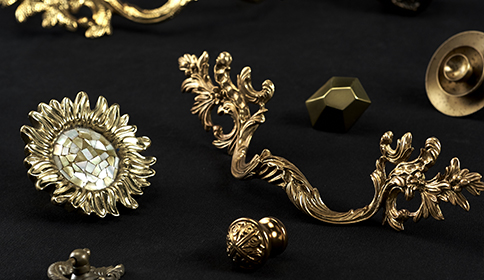
Antiqued brass and bronze hardware is finished to a deliberate tone that will darken slowly in use. This is intended; do not polish it. Polished brass and chrome are lacquered to hold their shine; the lacquer, not the metal, is what you are cleaning. Stainless steel resists corrosion but is not immune to it. Where protective coatings are scratched, moisture and oxygen reach bare metal and oxidation begins; near a coast, salt accelerates this sharply.
Never use
Metal polish on antiqued or lacquered finishes; acid, vinegar, lemon, ammonia or bleach; steel wool, scouring pads or abrasive creams; general-purpose commercial cleaners. A soft damp cloth is sufficient for almost all routine cleaning.
Upholstery leather is tanned, dyed and sealed with a thin protective coating that keeps it breathable. It is durable, and it changes with use in ways that distinguish it from any synthetic.
Patina is the even, gradual darkening and softening of leather on arms and seats, from skin oils, clothing contact and ambient humidity. It is a mark of quality leather and must never be removed or prevented. Damage is different: scratches, cuts, cracks or patches where the colour has gone. Natural variation in grain, texture and colour, even within one piece, is a mark of a genuine hide.
Ultraviolet light fades leather unevenly and dries it. Heat from a vent, radiator or direct sunlight accelerates the loss of natural oils and leads to cracking, which no conditioner or repair can reverse. Keep leather out of direct sun and 300 mm from any vent or heat source.
Blot, never wipe or rub. Press a clean absorbent cloth or paper towel onto the spill and lift away; use a fresh section each time until nothing more transfers. For a stubborn spill, blot with a cloth barely dampened with clean water, then immediately with a dry cloth. Never leave moisture on leather; never saturate it.
Leather takes the same general approach as fabric in section 2.7, with gentler handling. Use the least aggressive method first, test any product on a hidden area, and stop if the colour changes.
Never use
Modern upholstery leather needs no feeding. Leather foods, saddle soap, neatsfoot oil, polishes and waxes leave a greasy residue that attracts dirt and can soften or peel the finish. Alcohol, ammonia and citrus solvents strip the finish and cause drying, cracking and colour loss. Do not apply conditioners even in dry climates; they do not restore oils and they damage the coating.
Dust and grit, not spills, cause most upholstery wear. Vacuuming is the single most effective thing housekeeping does for fabric.
Dust carries sharp particles: soil, sand, skin cells, pollen. A seated guest presses them into the weave; movement grinds them against the fibres. The microscopic cuts accumulate until the fabric thins, pills or wears through. The damage is invisible until it is advanced. Fabric that is vacuumed weekly lasts two to three times longer than fabric that is not.
Ultraviolet light fades dyes and weakens fibres. In the first seconds after a spill the liquid sits on the surface; within a minute it penetrates; within hours dyes set; after 24 hours many stains are permanent.
First seconds
The liquid sits on the surface
Within a minute
It penetrates the fibres
Within hours
Dyes set
After 24 hours
Many stains are permanent
Blot at once with a clean white cloth or paper towel, working from the outside edge of the spill towards the centre so it does not spread. Press and lift; never rub. Use a fresh section of cloth each time until nothing more transfers. Apply no cleaning product unless a stain remains after blotting; then use the table below.
Test every method on a hidden area first. Blot dry between steps. The feathering technique means light strokes from the outside of the stain inwards.
Dry blood: loosen with a stiff brush first. Sponge with soda water and dab dry; repeat. If it remains, a weak solution of mild dish soap in cold water. Never warm water: heat sets the protein.
Chill with ice cubes in a plastic bag until hard, scrape off with a blunt knife. Residue: a cloth dampened with white spirit, test first.
Scrape off excess. Treat with cool water and a little liquid detergent. Residue: one part white spirit to two parts water on a sponge. Blot dry.
Sponge with warm water until clean, blot dry. Sprinkle talcum powder, brush off when dry.
Sponge with cold water immediately; the sugars become sticky and attract dirt. Blot dry; repeat.
Lift pulp with a blunt knife. A few drops of dish soap in water, sponged with the feathering technique. Blot dry, then sponge with clean water to remove sugar and soap.
Sponge with cold water, blot dry. Cover with talcum powder for 24 hours, brush off.
Dab milk on with a cotton pad to lift the ink. Follow with a weak solution of soap flakes in warm water, applied without saturating. Repeat as needed.
One or two drops of dish soap in water, applied with the feathering technique. Wipe dry. Talcum powder for 24 hours, brush off.
Cover with talcum powder for 24 hours, then brush or vacuum away. If it remains, test eucalyptus oil on a hidden area; apply a few drops on a dry cloth and wipe gently.
Scrape off excess. Test amyl acetate on a hidden area; apply with a clean cloth, avoiding any plastic trim. Blot dry. Residue: dish soap in warm water, sponge, blot, then cold water, blot.
Remove excess with a spoon or stiff brush. Sponge with clean water. Work dish soap into a froth and apply the suds with a sponge, wiping repeatedly. Blot dry.
Remove solids with a spoon kept for cleaning, then a blunt knife. Blot as much liquid as possible. Sponge with dish soap in warm water, wringing the sponge out repeatedly. Residue: a quarter cup of white vinegar in a cup of water, test first, repeat. Wipe dry; leave a bowl of baking soda nearby for odour.
Saturate with soda water (more effective than tap water) and blot with a clean cloth. Repeat until the cloth shows no colour. Warm tap water may be used for red wine if no soda water is available.
No match. Blot, test on a hidden area, and contact Customer Service.
White spirit and amyl acetate are flammable. Ventilate the room, keep them away from heat and flame, and store them in approved containers away from guest areas.
Never use
Bleach and oxygen brighteners leave a permanent pale spot. Abrasive cleaners and scrubbing brushes cause irreversible fuzzing and pilling. Fabric softeners leave a residue that attracts dirt. Steam cleaners can shrink fabric and lift dyes; use only a professional upholstery cleaner.
Coated fabrics and vinyl are specified where easy cleaning matters. Warm water with a little mild dish soap on a soft cloth removes most dirt; rinse with clean water and dry with a soft cloth. Ballpoint ink lifts with a cotton bud dipped in denatured alcohol, applied only to the ink mark, dabbed gently, never rubbed. Do not use solvents, abrasives, bleach or oil-based products, which can crack or cloud the coating.
Pieces specified for outdoor use are built from weather-resistant materials, but their life is greatly extended by protection. Cover or store them under shelter when not in use for extended periods, and always during storms and off-season.
The lifting rules in section 1.2 apply to every move. Before a piece is relocated between areas or floors, separate connected items, remove drawers and loose shelves from case goods, and protect corners and edges with blankets.
All fixings are reusable except cosmetic plastic cam-lock covers, which may be damaged on disassembly. Replacement covers and assembly instructions are available from the Customer Service Department on request. Retighten all hardware four weeks after any reassembly, as after first delivery.
Understanding is only useful when it is shared with every team member who touches the furniture.
| Who | Must Know |
|---|---|
| Housekeeping | Correct cleaning method and prohibited products for each material in their areas; spill response |
| Maintenance | Hardware schedule, inspection and damage protocol, relocation rules |
| Front-of-house | How to move pieces without damage; what guests should not do |
| Back-of-house and stores | Handling and storage rules |
| Management | Normal ageing versus damage; when to contact Customer Service |
The most effective protection is a team that takes pride in the furniture. Recognise good care in team meetings; treat mistakes as training, not blame.
The most effective furniture protection is a team that takes pride in maintaining it.
Summary
A one-page summary of Part 2 for housekeeping and maintenance teams.
| Material | Routine | Periodic | Never Use |
|---|---|---|---|
| Wood & veneer | Dust daily along the grain. Weekly damp wipe with mild pH-neutral soap; dry at once | Finish check monthly. 300 mm from vents | Spray polish, wax, silicone, glass cleaner, ammonia, alcohol, abrasives |
| Lacquer, painted & gilt | Dry dust only. Lacquer: barely damp cloth for prints, then dry | Report any liquid contact same day | Any product on gilt or paint; damp cloths on gilt; polish |
| Glass & mirror | Cleaner on the cloth, never the glass; buff dry | Keep cleaner off frames | Ammonia on antiqued mirror; abrasives |
| Stone & marble | Blot spills at once. Plain water + pH-neutral soap, rinse, dry | Poultice for stains; wood or plastic tools; distilled water | Vinegar, lemon, bleach, ammonia, abrasives, waxes, commercial cleaners |
| Metal & hardware | Dry dust, then damp cloth, then dry cloth | Coating check monthly. Hardware per 1.3 | Metal polish on antiqued finishes, acids, bleach, steel wool, scouring pads |
| Leather | Dust daily. Weekly barely-damp wipe, dry at once. Blot spills | Keep out of sun; 300 mm from vents | Leather food, saddle soap, oils, polish, alcohol, ammonia, citrus solvents |
| Fabric | Vacuum, brush attachment, low suction: weekly in rooms, 3× weekly public areas. Blot from outside in | Entrance seating daily in peak season. Walk-off mats | Bleach, brighteners, abrasives, scrub brushes, softener, steam |
| Vinyl | Warm water + mild soap, rinse, dry | — | Solvents, abrasives, bleach, oil-based products |
| Outdoor | Brush off, mild soap wash, air-dry | Cover or store in off-season and storms | Pressure washing; storing damp |
Support
For warranty claims, spare parts, assembly instructions, repair guidance, or any question about the care of JC Hospitality furniture, contact the Customer Service Department.
Factory and Customer Service Department
47/4, ĐT 743, Binh Phuoc B Area, An Phu Ward
Ho Chi Minh City, Vietnam
When ordering spare parts or reporting an issue, please quote the product code and the item's location.